
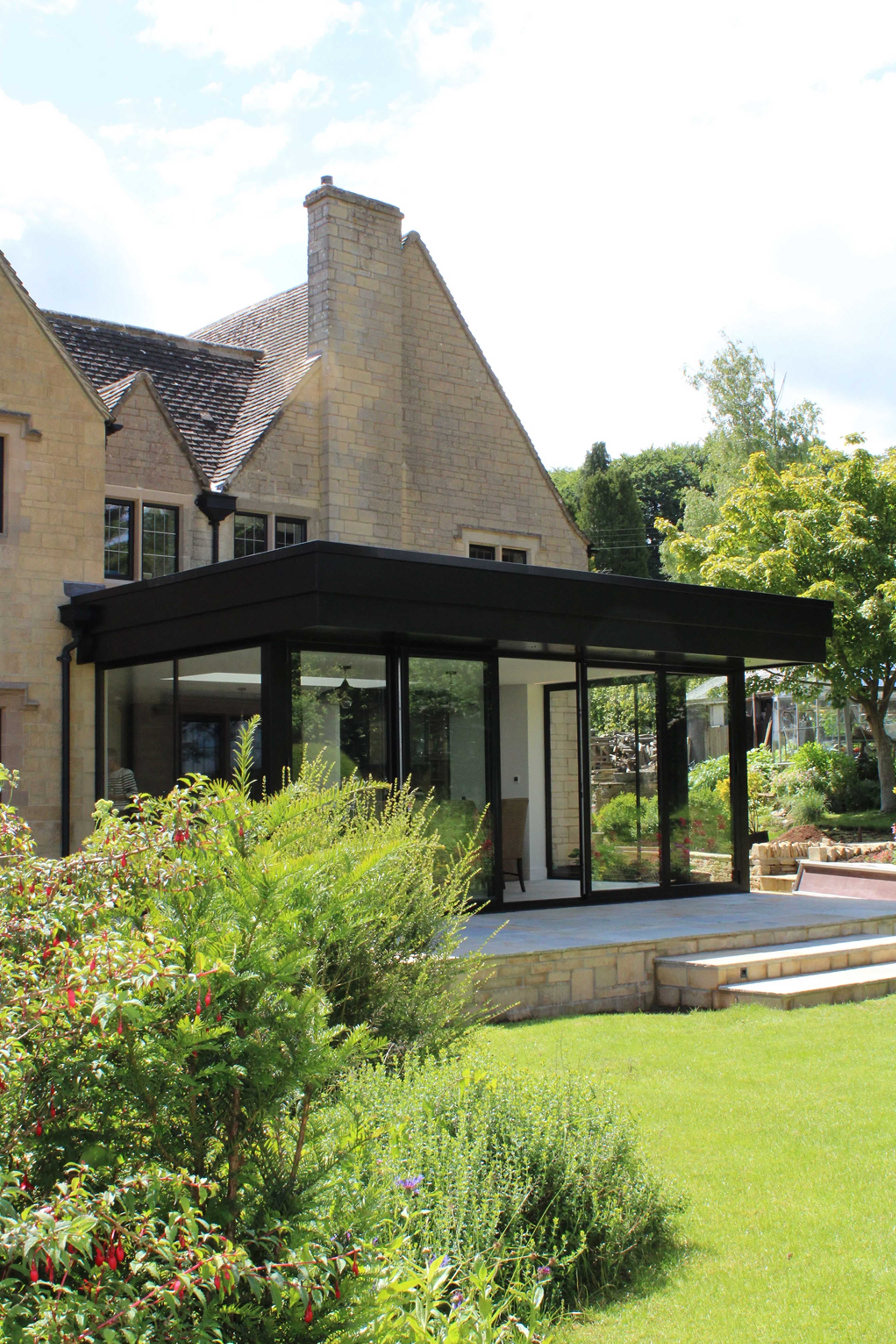

We offer a full service to provide best value for you on time, cost and quality. As artists, we combine conscious skill with an understanding of building. This combination is essential to the best architecture. Our experience and industry contacts allow us to deliver for you-private developer, self builder and homeowner.
2 Lockwood was founded to bring the rigour of larger practice together with the agility of a smaller practice and a personalised commitment to each project.
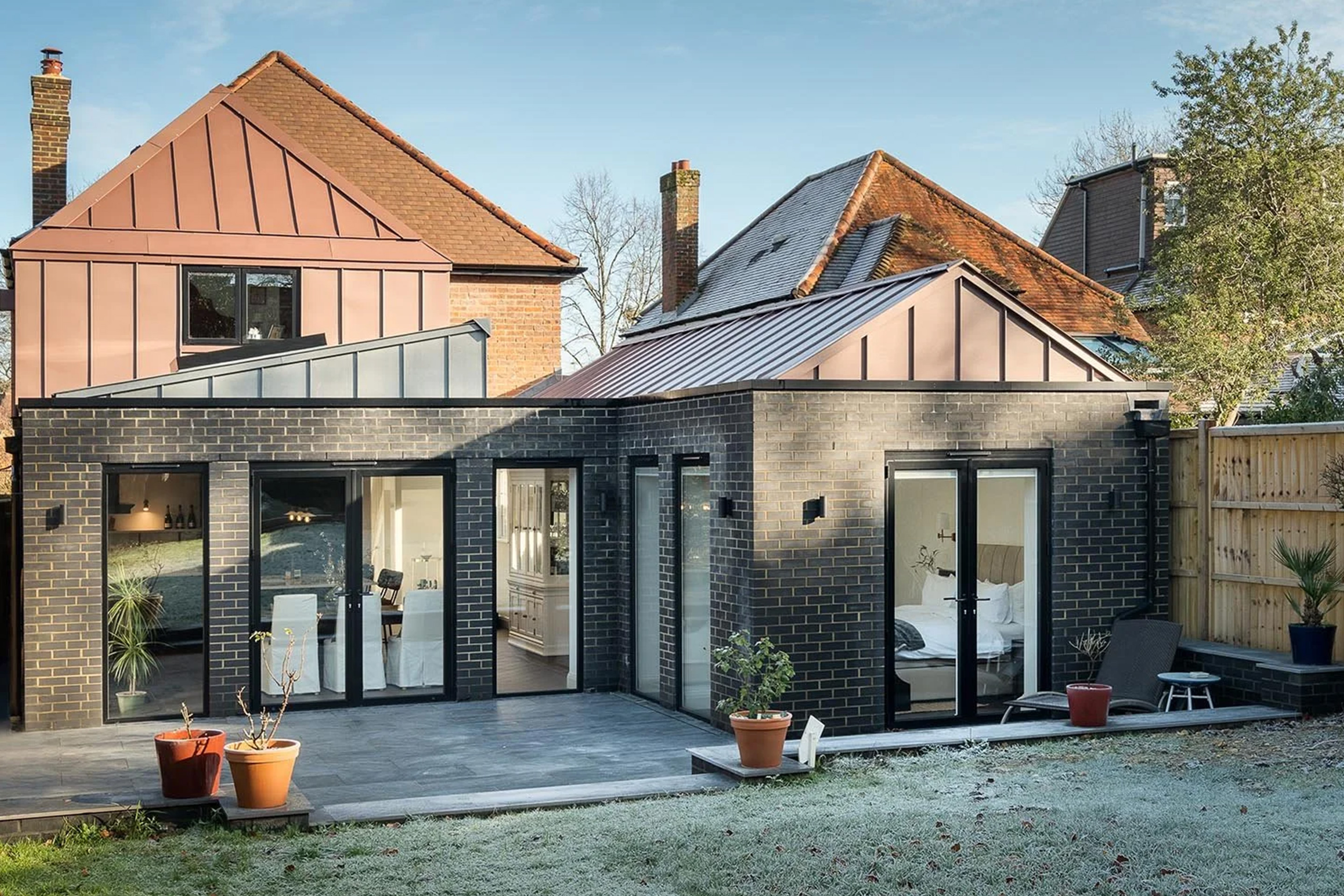
Dina qualified as a chartered architect in 1999, having trained at the Bath School of Architecture and completed her Part 2 at Oxford Brookes. Julian qualified in 1998, also from Oxford Brookes. Before founding 2 Lockwood, Julian’s career included working with Laurie Chetwood on large-scale mixed-use schemes and the Brighton New England Quarter. 2 Lockwood was founded to bring the rigour of larger practice together with the personal commitment that only a small, dedicated team can offer.
Contact UsTogether, we are deliberately ambitious, about the quality of what we produce, about the practice we are building, and about what architecture can genuinely do for the people who commission it.

We do not impose a signature style. We design from the inside out, responding to setting, context, and the way our clients actually live and use their spaces. Whether that calls for contemporary materials and clean lines, or traditional craftsmanship and familiar forms, is determined by the project, not by us.
We expect to be appointed as contract administrator on every project we design. This is not an optional add-on, it is the only way to ensure that what is built faithfully reflects what was agreed. Both of us have extensive, hands-on site experience. We know how contractors work, and we are confident, experienced presences on site.
Our clients are our focus, entirely and without reservation. We ask, in return, for their trust. Not blind trust, but the trust that comes from understanding that every decision we make is made in their interest: to protect their investment, to honour the brief, and to deliver something that genuinely exceeds their expectations. That is the basis on which we work, and it is the basis on which good projects are built.
We are based in Great Missenden, and our work is concentrated across Buckinghamshire and the surrounding areas, a county and its edges we know well, including its planning authorities, local materials, and built character. We are both individually chartered architects and a fully chartered practice, registered with the ARB and RIBA.
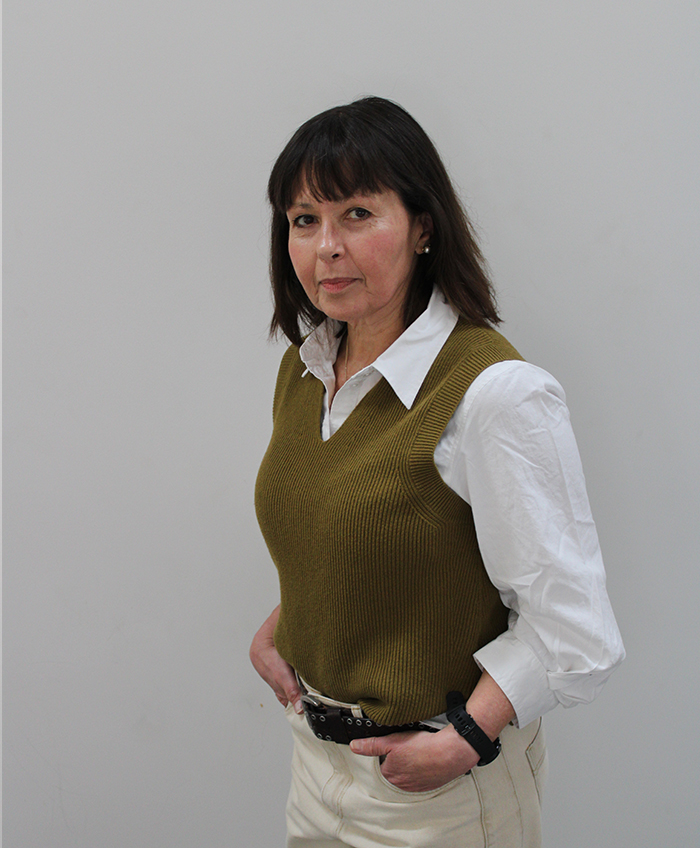
BSc (Hons) Bath, Dip Arch, RIBA
Dina brings an intensity to every project that is immediately apparent. Artistic and intuitive in the way she reads a space or a brief, she is equally at home in the analytical — in programme, numbers, and the rigorous logic that sits underneath good design. That combination of instinct and precision is rare. 2 Lockwood is, in part, the practice she has been working towards for a long time — and that sense of purpose shows in everything she does.
Together, we are deliberately ambitious — about the quality of what we produce, about the practice we are building, and about what architecture can genuinely do for the people who commission it.
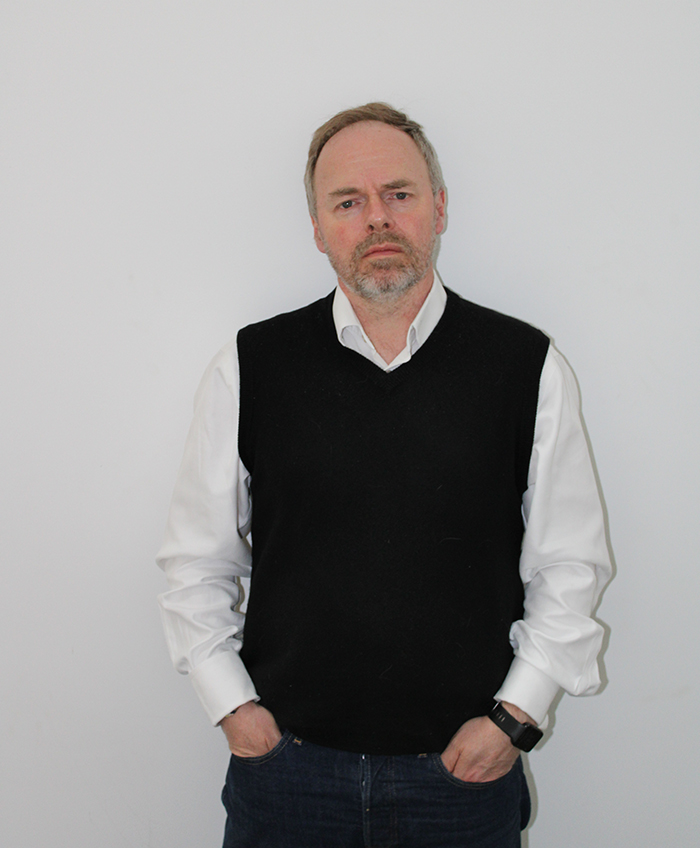
BA (Hons) int, Dip Arch, Dip UD, RIBA
Julian is, on the surface, exactly what you might expect of an architect: methodical, precise, quietly spoken on the matter of his own opinions. Look closer, and a different picture emerges. Julian is a qualified urban designer whose thinking in the 1990s helped make the intellectual case for what we now call mixed-use development — the idea, radical at the time and resisted by many, that people should live above the places they shop, that cities should be layered rather than zoned, that the street should be alive at all hours rather than dead after five. Those ideas are now so embedded in planning orthodoxy that it is easy to forget they once had to be argued for, forcefully, against considerable scepticism. Julian was one of the people arguing.
That quality — of holding a clear conviction about how things should be done, even when the mainstream disagrees, and being proved right — is not something that fades. It is present in every project he works on. The scale may be different. The ambition is not.
We offer a full service to provide best value for you on time, cost and quality.
It means never cutting corners, not on the design, not on the documentation, not on how we manage your contractor. It means giving your project the same attention at week thirty on site as we gave it at the very first meeting. It means being honest with you when something isn’t working, even if that’s a harder conversation.

Because we wanted to do it our way. The practices we worked at were excellent and we learned an enormous amount from them. But in a larger organisation, the partner you meet at the start isn’t always the person running your project six months later. We wanted to build something where that couldn’t happen. Where the experience and judgement you’re paying for is the experience and judgement you actually get from us, throughout.
Starting too late. People often come to us after they’ve already had a conversation with a builder, or made assumptions about what planning will allow, or decided on a layout they’ve seen on Pinterest. We have to unpick things that didn’t need to be complicated. The earlier we’re involved, the more we can shape the project in your favour before decisions get made that are difficult or expensive to reverse.
Every project we take on is looked at by two sets of eyes two people with decades of experience, different strengths and a shared commitment to getting it right. That means design decisions get tested, problems get spotted earlier and nothing slips through. You’re not relying on a single point of view. In our experience, that makes a measurable difference to the quality of the outcome.
Directly. The rigour required to deliver a large mixed-use scheme the contractor management, the cost control, the attention to programme, the coordination of consultants doesn’t disappear when the project gets smaller. It just becomes more personal. We bring the same professional discipline to a house extension that we brought to projects worth many times the budget.
With a conversation. No paperwork, no commitment, no fee. Just tell us what you’re thinking however half-formed it is and we’ll tell you honestly what’s possible, what the process looks like and whether we’re the right people to help. Most of our clients come to us not knowing quite what they want. That’s not a problem. Helping you find clarity is part of what we do.
Something always does. That’s not pessimism it’s the reality of construction. The question is whether you have someone in your corner who knows how to deal with it. We’ve seen most things over the years, and we know how to respond calmly, practically and in your interest. Having a proper building contract in place, and an architect administering it, means there’s a clear framework for resolving problems fairly. You’re not on your own.
Every project looks simpler than it is. Planning, regulations, contractors the complexities don’t disappear because the project is small. A conversation at the start costs nothing. Getting it wrong halfway through costs a great deal.
A good architect saves more than their fee through better decisions, tighter contractor management and problems caught before they reach site. The question isn’t whether you can afford an architect. It’s whether you can afford not to have one.
The title “Architect” is protected by law in the UK. Only ARB-registered professionals can use it. Chartered Architects are also RIBA members, bound by a code of conduct, insured and accountable. Anyone can offer “architectural services” with no qualifications, no insurance and no recourse. It’s worth knowing the difference before you appoint anyone.
Well-designed projects consistently add more value than their cost. Good design also makes your home work better more light, better space, a quality that’s immediately felt. Buyers and valuers notice the difference between something designed with care and something that simply got built.
It sets out clearly what is being built, for how much and by when and what happens if any of that changes. It protects both parties, provides a mechanism for valuing variations and gives you real leverage if things go wrong. Without one, you are exposed. We always recommend one. Always.